šŸ‘‘ (cromwell related?)

Hm idk if I have a contentious opinion on Cromwell, all mine have probably been said before?

I think he was very adept at adjusting to shifts in power, and even pushing them himself at times.Ā 

Don’t agree with the take that he was Henry’s puppet, don’t think HenryĀ ā€˜forced’ him intoĀ ā€˜finding a way to get rid of Anne’ early as April.Ā 

Cromwell was aligning himself with Chapuys and apologizing to him directlyĀ ā€œfor having promoted the King’s marriage to Anneā€ in April:

True, it was (he said), that seeing the King so much bent upon it, and so determined, he (Cromwell) had paved the way towards it. Although the King, his master, was still inclined to pay his court to ladles, yet it was generally believed that in future he would lead a more moral life than hitherto—a chaste and marital one with his present Queen. This Cromwell said to me in such a cold indifferent manner that I had a strong suspicion that he meant just the contrary. Indeed, I observed whilst he said so…he leant against the window close to which we were both standing, and put his hand to his mouth to prevent the smile on his lips, or to conceal it altogether from me should it come on;

ā€œPut his hand on his mouth to prevent a smile on his lipsā€ …. doesn’t really strike me as him being pressured by Henry to do something he doesn’t want to do….or like the prospect of Anne being ousted is something he’s really torn up about.Ā 

Ā He was aligning himself with the Seymours, and with Mary.Ā 

He benefited from the events of May 1536 as well (at least, in the short term):

ā€œThe cui bono evidence is also interesting: Cromwell replaced Anne’s father as Lord Privy Seal and obtained a valuable stewardship as a result of George Boleyn’s execution; his servant Sadler received William Brereton’s freehold estate near Greenwich.ā€Ā 

hi yes i will happily enable you : šŸ‘‘

So all theā€¦ā€X was an usurperā€ (this isn’t shading for any figure in particular, this is me regarding all the figures of this era)…rhetoric…and I just say…

Who care? WHO care? Who c a r e s ???

I mean as far as analyzing which prominent people of the time viewed X as an usurper, sure, it’s important but as far as likeā€¦ā€¦ā€I myself think they never should have ruled because they were an usurperā€, uh:

a) It was such a mutable definition, it depended on who you asked at the time, and who was around when you asked them, and who won in a battle, and who had more people on their side, and like a myriad of different factors but basically…it was down to who you asked (’is X the rightful ___ or nah?’, that is)Ā 

b)Ā ā€˜Divine right’ is uh…..like…….they made it up?? Like they very much believed in it but also it was not…real.Ā 

I’m hoping we know by 2018 that no one deserves to rule a country just for being born to two specific people.

And you know that Facebook Group that’s likeĀ ā€œif a witch eats the president, the witch should become that presidentā€ ?

ā€œIf a contender for the throne kills the king, that man should become king.ā€

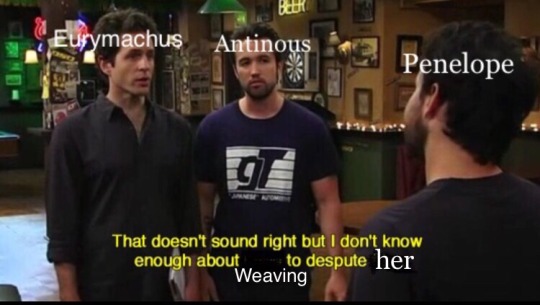
Me, a 24-year-old peasant about to die: ā€œThat sounds wrong, but I don’t know enough about the Bible to dispute itā€¦ā€

c) Starkey has said R3 was an usurper. He’s also said H7 was basically an usurper.Ā 

R3 may have taken the throne, but it was technically by legal methods (excluding the executions of Anthony Woodville etc. and I’m def not saying legality equates morality but there is that).

H7 won it in battle.Ā 

So by that definition, if we want to trace back, would Edward IV also not technically be an usurper? He wasn’t born king, that was Henry VI.Ā 

I literally don’t have much of a POV re: preference between these three (actually…Edward IV but also see above what I just said…also all three of them had some sort of blood claim to the throne as well), I’m just using this is an illustrative point in that the word is basically kind of … meaningless.

In that you can apply it to anyone/ anything you want, if you delve into technicalities/precedent deep enough.Ā 

I’ll also see it with COA vs. Anne Boleyn discourse so like….far reaching enough to even apply the term of ā€˜usurper’ to Queen Consorts (usually applied to Anne), which is very odd. It’s one thing to sayĀ ā€œCOA believed it was her divine right to be Queenā€ (true!) another thing to sayĀ ā€œit WAS her divine right.ā€

Like…it wasn’t. See above: they made it…..up.

It wasn’t any more Anne’s, either, although she seemed to believe this as well– she said to a Venetian diplomat that God had inspired Henry to marry her.

Tl;dr, we should all find it very convenient that anyone that sat on a throne essentially said they were thereĀ ā€œbecause God said so.ā€

šŸ‘‘

In some nonfiction works (usually where the author or the historian is especially sympathetic to COA), I’ve read the take that Henry’ VIII’s acknowledgement and ennoblement of his son wasĀ unconscionable and/or unconscionably cruel.Ā 

Now…I don’t think this was particularly a considerate thing for him to do concerning his wife, obviously (although the adultery itself is…more so, I would think? the pregnancy and child was simply the result/proof of it).

And I’m wondering what, conversely, these writers think he should have done instead? Because usually it seems less like they’re implyingĀ ā€œwell, he just shouldn’t have committed adultery in the first placeā€ (which tends to be…an argument not made often, because what isĀ ā€˜shouldn’t’ to a king, esp. when it’s kind of de rigueur) and more like ā€œit’s fine to commit adultery, but he should at least have to decency to conceal it/lie about itā€ and I don’t really think that makes it, like……better….

So, yeah, conversely he was supposed to…what? Be likeĀ ā€œgood luck with all thatā€ to Bessie Blount? Pull an #IDon’tKnowHer ?

Because the ennoblement and acknowledgement certainly wasn’t, like I said, considerate to COA. But I don’t think it wasĀ ā€œunconscionableā€ā€“ what would’ve been more so would be, actually, to do the opposite of what he had done: not acknowledge him, not title him, not extend lands/incomes, not arrange a noble marriage for his former mistress, not grant her property, etc.Ā 

I’ve also read that if she’d had a daughter, he never would have acknowledged her, and that he only acknowledged Henry Fiztroy toĀ ā€œrub salt in [COA’s] wounds for not having had a living son yetā€.

While I’m sure they read his secret diary and thusly know all his motivations behind every decision, I don’t have this diary and so…don’t know.

But also? We don’t really know that, because that isn’t what happened. He may well have acknowledged an illegitimate daughter (although people say one of Mary Boleyn’s was his, and a few other women’s daughters were his, there’s no definitive proof), although I don’t think he would’ve titled a potential bastard daughter by Blount asĀ ā€œDuchess of Richmondā€ā€“ hereditary titles/peerages weren’t typically given to even women of legitimate birth (besides the Countess of Salisbury in 1512, and later the Marquess of Pembroke for Anne), much less illegitimate ones. He was probably far too much of a traditionalist for that [which, you know, he was…….save for the whole Thousand Year Break With Anglican Tradition to Marry ā€˜The One’ (of Six) thing].Ā